Table of Contents
Introduction
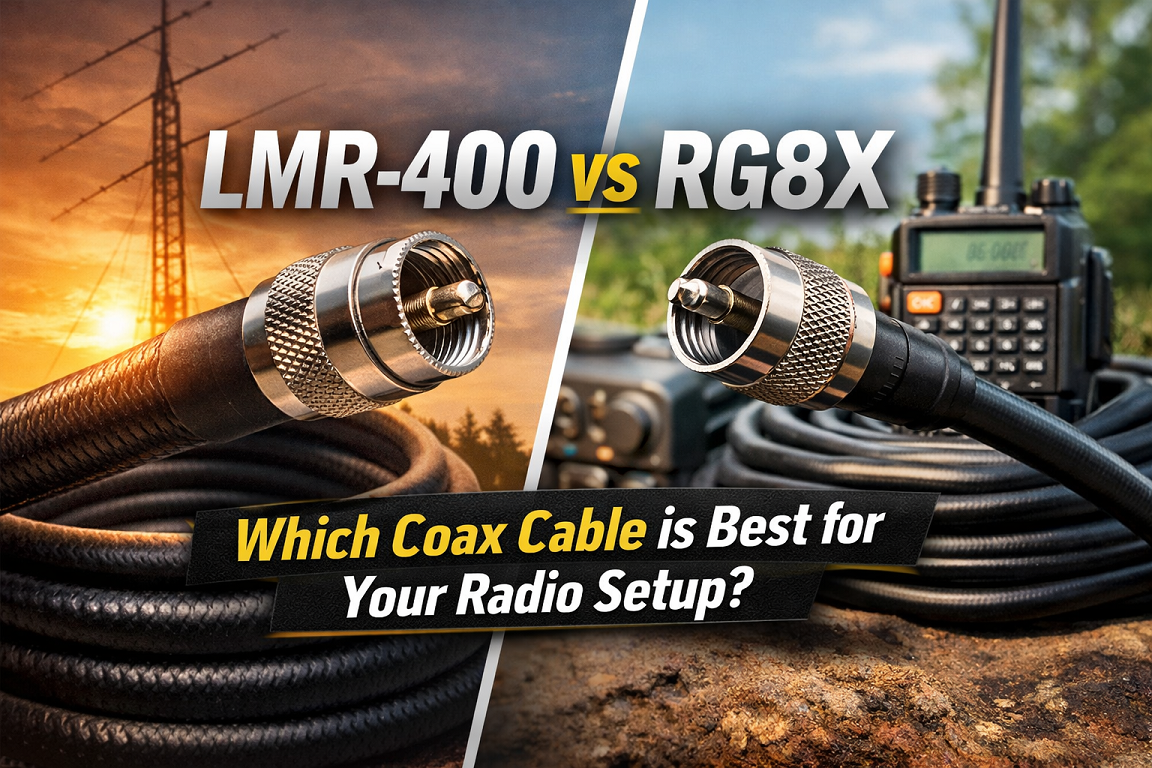
Choosing the right coax cable for your radio system can make a massive difference in signal strength, clarity, and overall performance. Among HAM and GMRS operators, the debate between LMR-400 vs RG8X coax cable is one of the most common.
In this guide, we’ll break down the real-world differences between LMR-400 and RG8X, including performance, durability, cost, and ideal use cases — so you can confidently choose the best coax cable for your setup.
What Is LMR-400 Coax Cable?
LMR-400 is a low-loss coaxial cable designed for high-performance radio applications. It’s thicker and more rugged than most standard cables, which helps dramatically reduce signal loss — especially over long distances.
Key Features of LMR-400
- Extremely low signal loss
- Ideal for long cable runs
- Handles higher power levels
- Weather-resistant for outdoor installations

What Is RG8X Coax Cable?
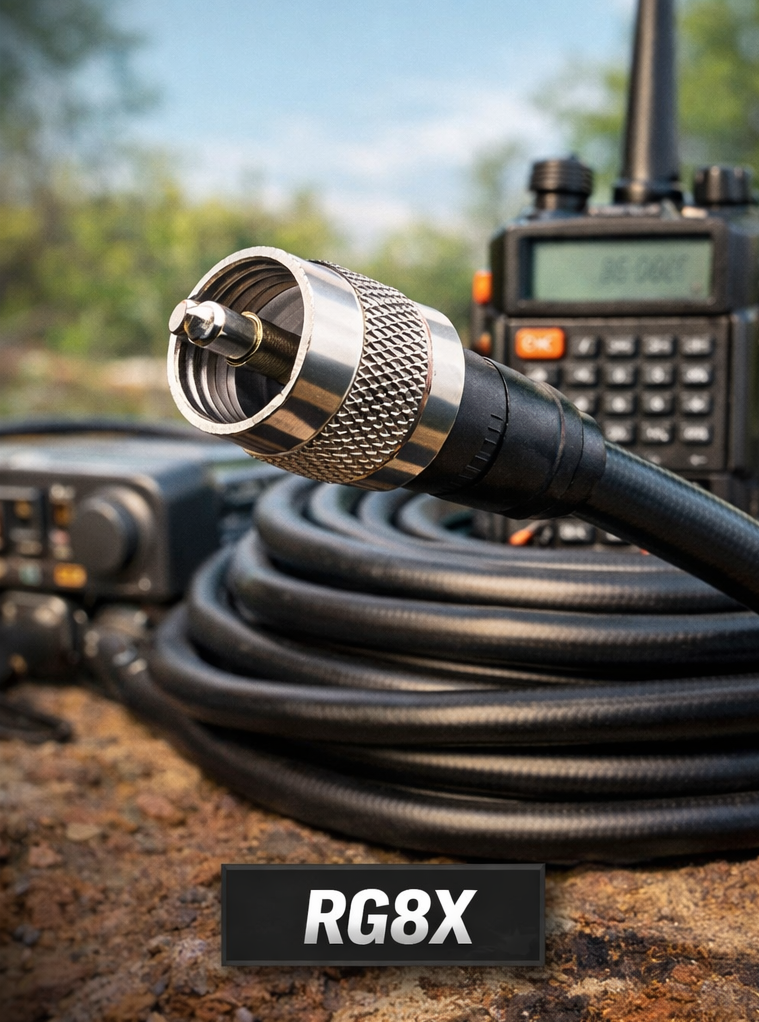
RG8X is a compact and flexible coax cable that’s popular for mobile and portable radio setups. While it has slightly more signal loss than LMR-400, it’s much easier to route and install.
Key Features of RG8X
- Lightweight and flexible
- Easier for tight spaces
- More budget-friendly
- Perfect for shorter cable runs
LMR-400 vs RG8X: Side-by-Side Comparison
| Feature | LMR-400 | RG8X |
|---|---|---|
| Signal Loss | Very Low | Moderate |
| Cable Thickness | Thick | Thin |
| Flexibility | Moderate | High |
| Best Use | Long runs, base stations | Short runs, mobile setups |
| Price | Higher | Lower |
| Durability | Excellent | Good |
When comparing LMR-400 vs RG8X coax cable, the biggest deciding factor is distance. The longer your run, the more LMR-400 shines.
Which Coax Cable Should You Choose?
Choose LMR-400 if you:
- Run cables 50 feet or longer
- Want maximum signal efficiency
- Have a base station or rooftop antenna
- Use higher-power radios
👉 Recommended LMR-400 Cable:
Buy on BridgeCom Systems – https://www.bridgecomsystems.com/?ref=TheRadioOpBox
Choose RG8X if you:
- Need a flexible cable for tight routing
- Have a portable or mobile setup
- Want a budget-friendly option
- Run cables under 50 feet
👉 Recommended RG8X Cable:
Buy on Amazon– https://amzn.to/49FJgXC
Pro Tip from RadioOpBox
No matter which coax you choose, always pair it with high-quality connectors and inspect them regularly. A poorly crimped or corroded connector can cancel out the performance of even the best coax cable.
For best results:
- Use weatherproof connectors outdoors
- Check SWR after installation
- Replace damaged coax immediately
🔗 Internal Resource:
How to Build the Perfect Portable Radio Setup
https://radioopbox.com/portable-radio-setup-guide
Real-World Use Cases: Choosing the Right Coax in the Field
When comparing LMR-400 vs RG8X coax cable, specs only tell part of the story. Real-world installations often come down to how and where your radio system is actually used.
Base Station Example
If you’re running a home base station with the antenna mounted on a roof or tower, your coax run may easily exceed 50–100 feet. In this scenario, LMR-400 is the clear winner because its low-loss design preserves more of your transmitted and received signal — especially important for both ham and GMRS operators working distant repeaters.
Mobile & Portable Setup Example
For mobile rigs, go-boxes, or portable field stations, flexibility and ease of routing matter more than ultra-low loss. That’s where RG8X shines. Its lighter weight makes it perfect for temporary setups, vehicle installs, and quick-deploy radio kits where runs stay short.
Budget vs Performance
- If performance is your top priority → LMR-400
- If convenience and cost matter more → RG8X
Matching the coax to your real operating environment ensures you get the best results without overspending or overbuilding your setup.
Why This Matters for ham & GMRS Operators
For both ham radio enthusiasts and GMRS users, coax cable is often the most overlooked part of a radio system. Many signal issues blamed on antennas or radios actually come from:
- Excessive coax loss
- Poor connector quality
- Wrong cable choice for the run length
By choosing the right cable from the start, you improve:
Overall system reliability
Transmit efficiency
Receive sensitivity
Conclusion
Both LMR-400 and RG8X coax cables are excellent choices for HAM and GMRS radios — when used in the right situation.
If you want maximum performance over distance, go with LMR-400.
If you need flexibility and affordability, RG8X is the smart pick.
Either way, choosing the right coax cable ensures you get the most out of your radio investment.
🔗 Related Reading
- Beginner’s Guide to Frequency Programming https://radioopbox.com/frequency-programming-for-radios-step-by-step-ham-gmrs-guide/
- Portable Field Radio Station Guide
https://radioopbox.com/portable-field-station
📢 Affiliate Disclosure
Some links in this article are affiliate links. This means RadioOpBox may earn a small commission if you purchase through them — at no extra cost to you. These commissions help support our website, content creation, and community resources. We only recommend products we genuinely use and trust in real-world radio setups.

Leave a Reply